



The complete guide
How to Choose a Big Dog Bed That Actually Fits
The problem with most big dog beds
Walk into a pet shop and you will see a wall of beds, and the large ones are usually just medium beds with a bit more stuffing. Your dog lies down, their head hangs off one end, and within three months the middle of the bed has flattened into a dish. They end up sleeping on the floor next to the bed, which is a slightly insulting outcome after you have spent good money.
Two things cause this. The first is size. A large dog stretched out on their side takes up far more length than most people guess, and a bed that looks huge in a shop looks small the moment a shepherd lies on it. The second is the base. Loose fibre fill compresses under weight and does not spring back, so a bed that felt generous in week one is thin and lumpy by month four.
This bed tries to solve both. It is 112 x 81 cm, which is genuinely long rather than just wide, and the base is foam with an egg-crate profile instead of loose filling.
How the foam base works
Egg-crate foam is moulded with raised sections and dips across the surface, a bit like the packaging the name comes from. Instead of a dog's weight pressing down on one flat plane, it spreads across dozens of smaller contact points. Those raised sections also leave small channels, so a bit of air can move under the dog rather than being sealed in.
For a heavy dog this is the difference between a bed that holds its shape and one that collapses. A 35 kg dog puts real load through their shoulder and hip when they lie on their side. A profiled foam base distributes that load. The total height of the bed is 16.5 cm, which lifts your dog off a cold tiled or timber floor without turning getting into bed into a project.
Foam also recovers. When your dog stands up, the surface comes back. That is the practical test of any bed base, and it is the test loose fibre fill fails first.
The sofa shape and why dogs like it
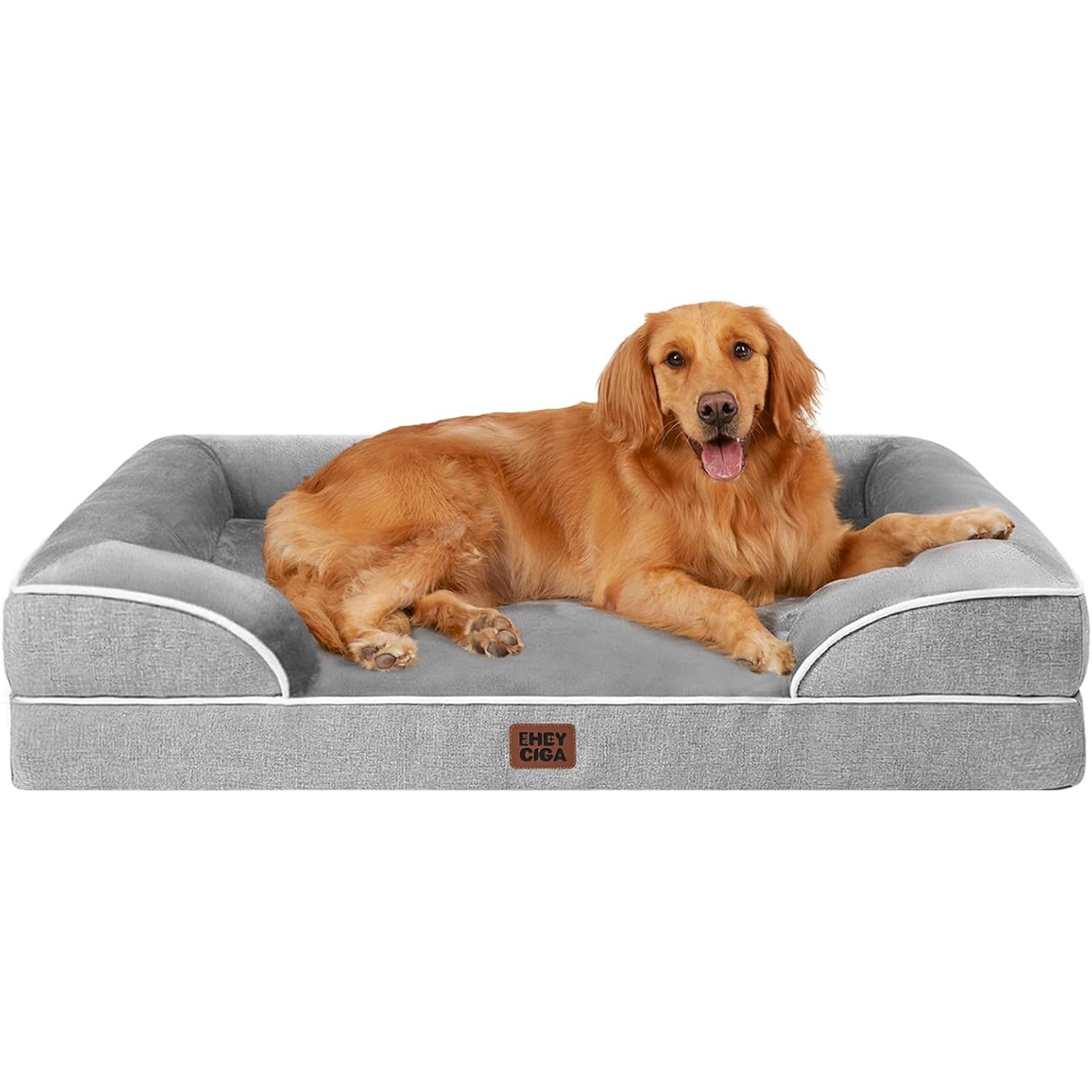
Bolsters run along three sides of this bed, with the front left open. The open front is deliberate. A dog with a bit of age on them, or one who is simply large and does not fancy climbing, can walk straight on without lifting their legs over a rim.
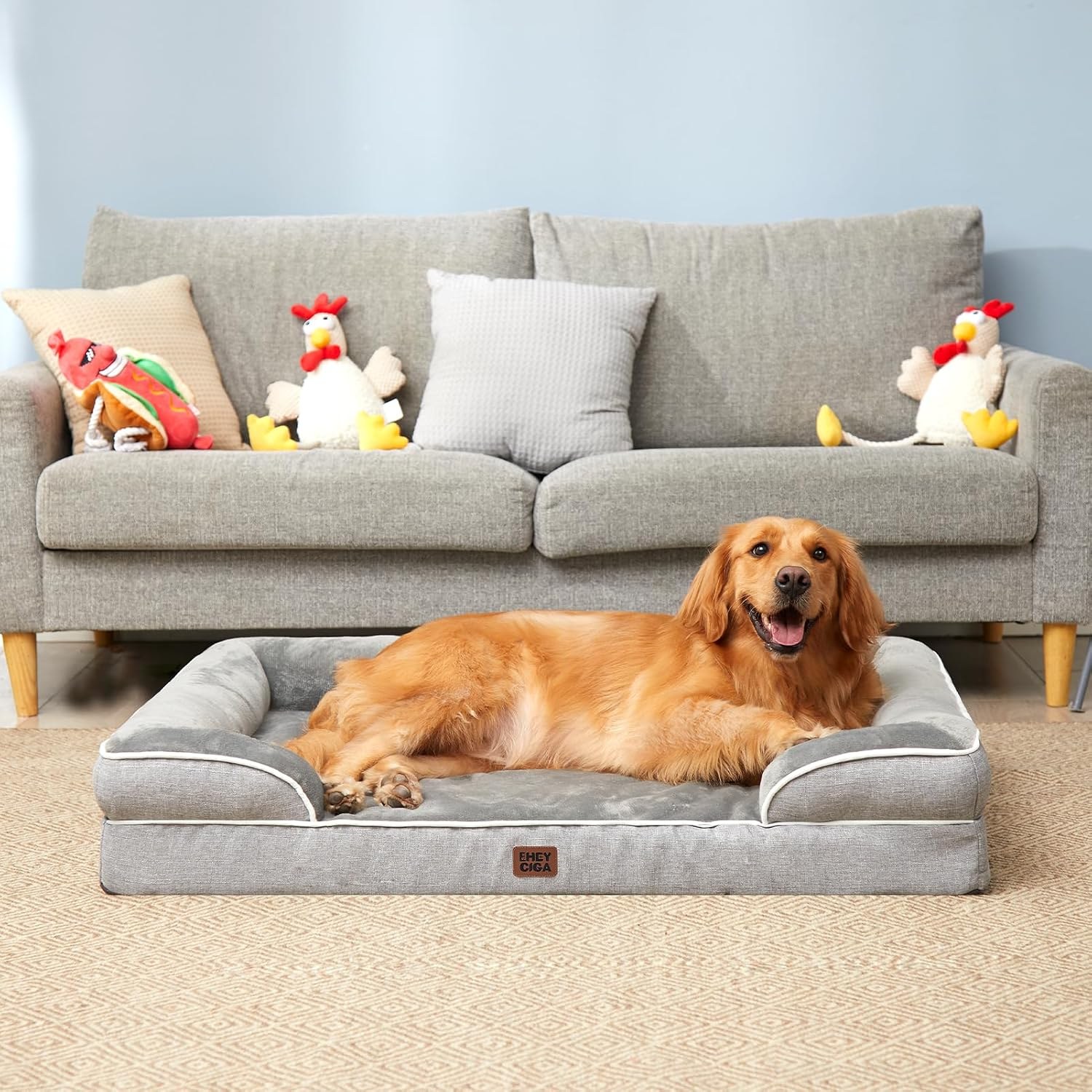
The three raised sides do something dogs appear to genuinely want. Watch a dog sleep on a couch and they will usually push a back or a head into the cushion behind them. The bolsters give them that same contact. Some dogs drape their chin over the edge, some wedge themselves into a corner, some lean a whole shoulder against the side. It is why people call this a dog sofa bed, and it is often the reason a dog who ignored a flat mat will use this one.
If your dog is a sprawler rather than a curler, the open front still works in their favour. They can hang their back legs out the front and keep their head propped on a bolster, which is a very common large-dog sleeping position.
Fabrics, and what the waterproof layer really does
Two fabrics are in play. The sleeping surface is fleece, which is soft and warm and is the part in contact with your dog all night. The sides and bolsters are faux linen, a woven-look fabric chosen because sides take more rubbing and leaning than the flat surface does.
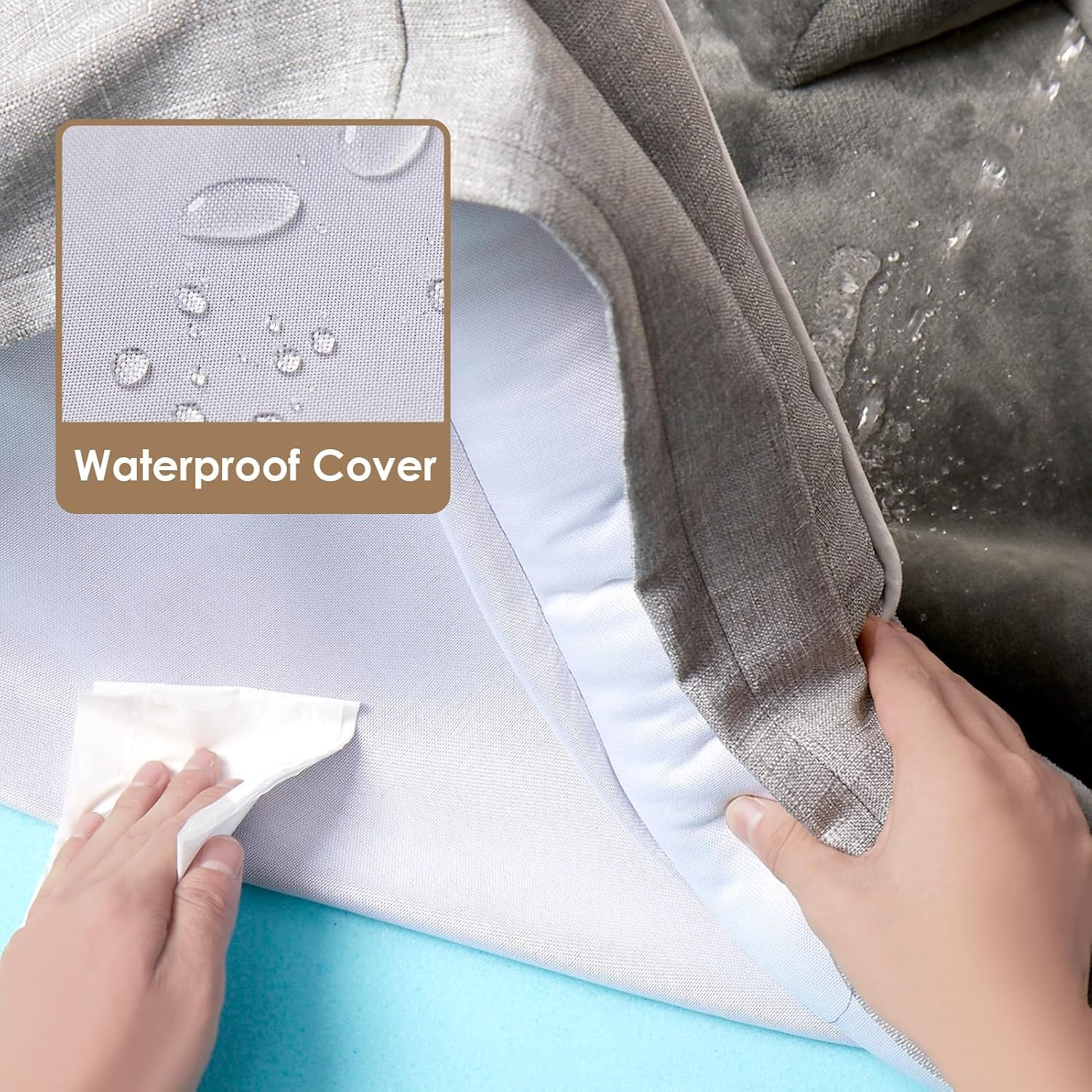
Between the fleece and the bottom fabric there is a waterproof film. Be clear about what that means. If water goes onto the sleeping surface, the film stops it travelling down into the base below. That is useful for a spilled bowl, a dog who comes in with a wet coat after rain, or an older dog who has the occasional accident.
What it does not mean is that the bed is a waterproof bed. The faux linen sides are not waterproof. The fleece surface itself will still get wet before the film does its job. Think of the film as protection for the base, not as a seal around the whole thing. Wipe up spills quickly and then wash the cover.
Getting the size right
This is the part worth slowing down for, because size is the single most common reason a bed gets returned.
Get your dog to lie down on their side in their most stretched-out position, the one where they look like they have melted. Measure from the tip of the nose to the base of the tail. That number is your minimum. You want the bed noticeably longer than it, because dogs shift position through the night and because the bolsters eat into the usable interior.
The bed's external footprint is 112 x 81 cm. The flat sleeping area inside the bolsters is smaller than that. So if your dog measures 100 cm stretched out, the fit will be snug rather than roomy. At 80 cm you have plenty of space.
The maker also recommends the bed for dogs up to 45 kg. Use both figures together. A heavy but short dog and a light but very long dog are different problems, and checking only weight will mislead you.
Also measure the floor. A bed this size needs a clear 112 x 81 cm patch, and ideally a wall or a piece of furniture behind it so the bolsters have something to back onto.
Setting it up and keeping it clean
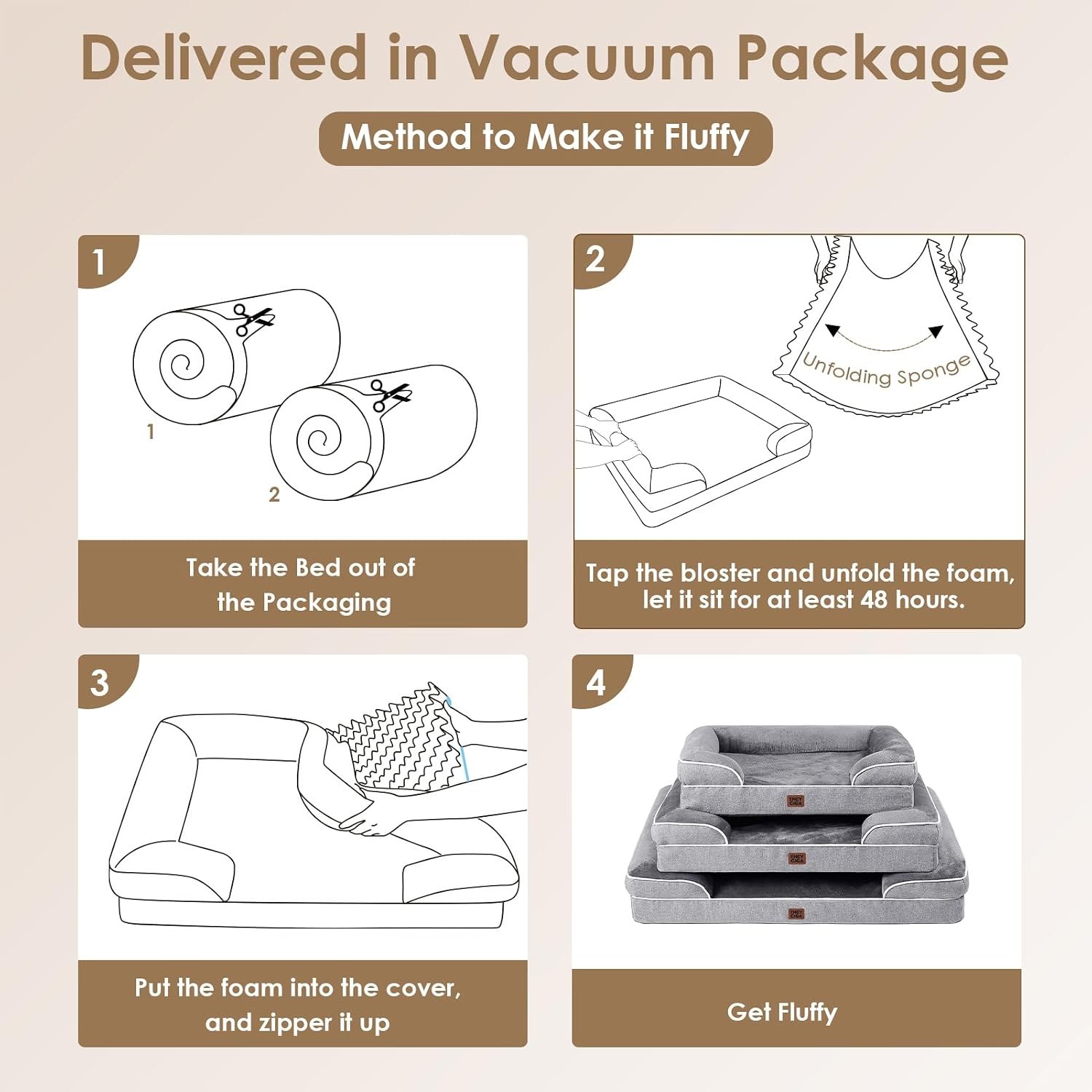
The bed arrives compressed. Unpack it, lay it flat in a warm room, and give it 24 to 48 hours to expand to full height. Do not judge the bed on day one. It will look thin and sad and then it will not.
A new foam bed may carry a faint smell for the first day or two. Airing the room sorts that out during the expansion window.
For cleaning, the cover unzips and the foam insert comes out. Wash the cover on a cool gentle cycle with mild detergent, skip the bleach and the fabric softener, and air dry it rather than using a hot dryer. High heat is what wrecks fleece. Only refit the cover once it is completely dry.
The foam insert does not go in the machine. Spot clean it with a damp cloth and let it dry fully. Between washes, run a vacuum over the sleep surface to lift hair and grit, and take the bed outside on a dry day now and then to air.
The underside is non-skid, which keeps the bed in place on hard floors. That also means you should lift the bed to vacuum under it rather than dragging it, which is easy enough at 3.61 kg.
Where this bed fits, and where it does not
This is an indoor bed. Fleece and faux linen are not made for weather, sun or damp outdoor air. Keep it inside.
It suits large breeds rather than giant ones. A labrador, a boxer, a shepherd, a golden retriever, a staffy of generous proportions, these are all within range. A great dane or an english mastiff will usually be over both the length and the weight guidance, and would be better served by something bigger.
It is not sold as chew resistant, and no fabric bed survives a dog who treats bedding as a chew toy. If that is your dog, supervise the first few weeks and keep a proper chew item nearby.
The short version
Measure your dog lying stretched out and make sure that number sits comfortably under 112 cm. Check their weight against the 45 kg guidance. Clear a 112 x 81 cm patch of floor, ideally against a wall.
Then expect a foam base that holds its shape under a heavy sleeper, three bolster sides for dogs who like something to lean on, an open front for easy access, a waterproof film protecting the base from spills reaching the sleep surface, and a cover that zips off and washes. Give it two days to expand when it arrives, keep the foam out of the washing machine, and the bed should stay in good order for a long time.