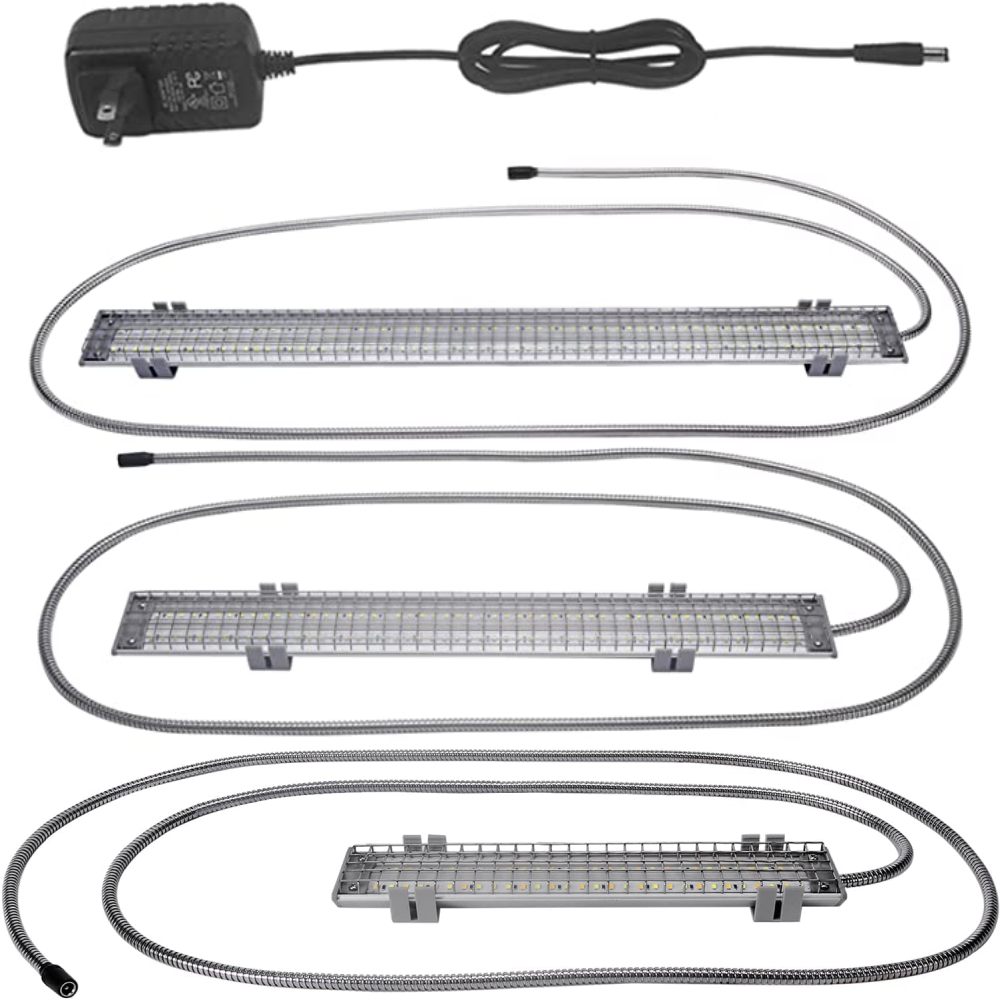
| Best Bird Cage Light | Illuminate Your Feathered Friend’s Habitat |
|---|
| Behavioral Enrichment | Bright, naturalistic lighting encourages normal activities like preening, foraging, and singing |
|---|
| Feather Pigmentation | Quality illumination enhances plumage color, helping you enjoy your bird’s true hues |
|---|
| Seasonal Cues | Varying light cycles mimic changing day lengths, supporting breeding cycles in species that naturally reproduce in spring and summer |
|---|
| Mental Well-being | Dim or flickering lights can stress birds; consistent, stable illumination promotes calm and reduces feather plucking |
|---|
| Full-Spectrum Output | Look for bulbs that emit UVA and UVB alongside visible light to replicate natural sunlight |
|---|
| Color Rendering Index (CRI) | A CRI above 90 ensures true-to-life feather colors and clear visibility inside the cage |
|---|
| Adjustable Intensity | Dimmable fixtures or multi-level switches let you fine-tune brightness for dawn, daylight, and dusk simulation |
|---|
| Heat Management | LEDs produce minimal heat, reducing the risk of overheating your bird’s enclosure |
|---|
| Lifespan & Reliability | High-quality LEDs last 25,000–50,000 hours, meaning years of maintenance-free operation |
|---|
| UVB Percentage | For most parrots, 2–5% UVB is recommended; smaller species often need less. Check manufacturer UVB ratings carefully |
|---|
| Physical Durability | Bird cages can be active environments. Choose shatterproof, water-resistant housings to withstand curious beaks and humidity |
|---|
| Limited Spectrum | Minimal UVA/UVB output, requires supplemental UV lighting |
|---|
| High Energy Use | Consume more electricity and generate excessive heat when placed too close |
|---|
| Shorter Lifespan | Bulbs often last only 1,000–2,000 hours |
|---|
| No Visible Spectrum | Birds still need daytime lighting |
|---|
| High Heat Output | Must be installed with caution to avoid burns |
|---|
| Good UV Ratio | Often 5–10% UVB, which can be too strong for some birds |
|---|
| Fragile Construction | Glass tubes risk breaking in busy cages |
|---|
| Compact Design | Clips onto cage tops or overhead mounts without multiple bulbs |
|---|
| Tailored Spectrum | Engineered specifically for avian needs, balancing visible and UV light |
|---|
| Spectrum | 93 CRI, 2% UVB, high UVA output |
|---|
| Adjustability | Touch-dim settings for morning, midday, and evening modes |
|---|
| Mounting | Clip-on bracket fits up to 1” cage bars |
|---|
| Lifespan | 50,000 hours |
|---|
| Why We Love It | Combines reliable UVA/UVB emission with precise brightness control, our overall best LED bird light |
|---|
| Design | Aluminum housing with silicone covers for water resistance |
|---|
| Control | Smartphone app for scheduling and intensity adjustments |
|---|
| Output | Warm white LED + infrared ceramic heat |
|---|
| Mount | Adjustable clamp for horizontal or vertical installation |
|---|
| Features | Built-in thermostat sensor for safe temperature regulation |
|---|
| Coverage | Fits 24” and 36” cages, providing even light distribution |
|---|
| Safety | Protective acrylic shield prevents direct contact |
|---|
| Type | Portable USB-powered LED with UVB panel |
|---|
| Flexibility | Gooseneck arm for precise positioning |
|---|
| Battery | Built-in 2000mAh battery for 4-hour runtime |
|---|
| Identify UV Requirements | Research your bird’s natural habitat, desert species need higher UVB (3–5%), while forest dwellers fare well with 1–2% |
|---|
| Measure Cage Dimensions | Ensure the fixture spans the cage’s entire width for even illumination |
|---|
| Assess Mounting Options | Clip-on lights suit smaller cages; overhead rails or ceiling mounts work for aviaries |
|---|
| Consider Power Source | For remote setups, choose battery or USB-powered units; in laboratory settings, mains-powered fixtures offer continuous coverage |
|---|
| Check Safety Certifications | Look for RoHS, ETL, or CE marks ensuring low EMF emissions and flame retardance |
|---|
| Factor in Control Features | Dimmability, timers, and remote operation add convenience and support natural day–night cycles |
|---|
| Maintain Distance | Position lights 12–18 inches above perches to balance intensity and avoid overheating feathers |
|---|
| Avoid Direct Eye Contact | Angle UVB sources so birds can benefit indirectly without staring into bright beams |
|---|
| Use Protective Shields | Acrylic covers prevent curious beaks from contacting hot bulbs |
|---|
| Secure Mounting | Use sturdy clips or brackets rated for the light’s weight, birds may cling or bump the fixture |
|---|
| Create Light Zones | Provide shaded areas so birds can escape bright light if desired |
|---|
| Clean Diffusers Monthly | Wipe acrylic shields with a damp microfiber cloth to remove dust and droppings |
|---|
| Replace UVB Diodes Annually | UVB output declines over time, even if the LED still glows |
|---|
| Inspect Electrical Components | Check cables and connections for wear; replace frayed wires promptly |
|---|
| Test Dimmers & Timers | Verify scheduling functions after power outages or resets |
|---|
| Monitor Bird Behavior | Watch for feather damage or eye rubbing that may indicate excessive intensity or proximity |
|---|
| Overexposure | Leaving UVB lights on 24/7 can damage skin and eyes; mimic a natural 10–12 hour daylight cycle |
|---|
| Insufficient Coverage | A single small lamp may leave dark corners. Use multiple fixtures if needed |
|---|
| Ignoring Spectral Output | Visible brightness does not equate to UVB emission. Always check specs for UVA/UVB percentages |
|---|
| Poor Ventilation | Enclosures with sealed tops can trap heat. Ensure airflow around the light to prevent overheating |
|---|
| Unsafe Mounts | Avoid cable ties or adhesive tape that degrade over time; use purpose-designed brackets |
|---|
| Mimic natural photoperiods | 10–12 hours of light followed by 12–14 hours of darkness. Adjust seasonally for breeding species if needed |
|---|
| Weight | Three lengths: 10, 18 and 24 inches |
|---|